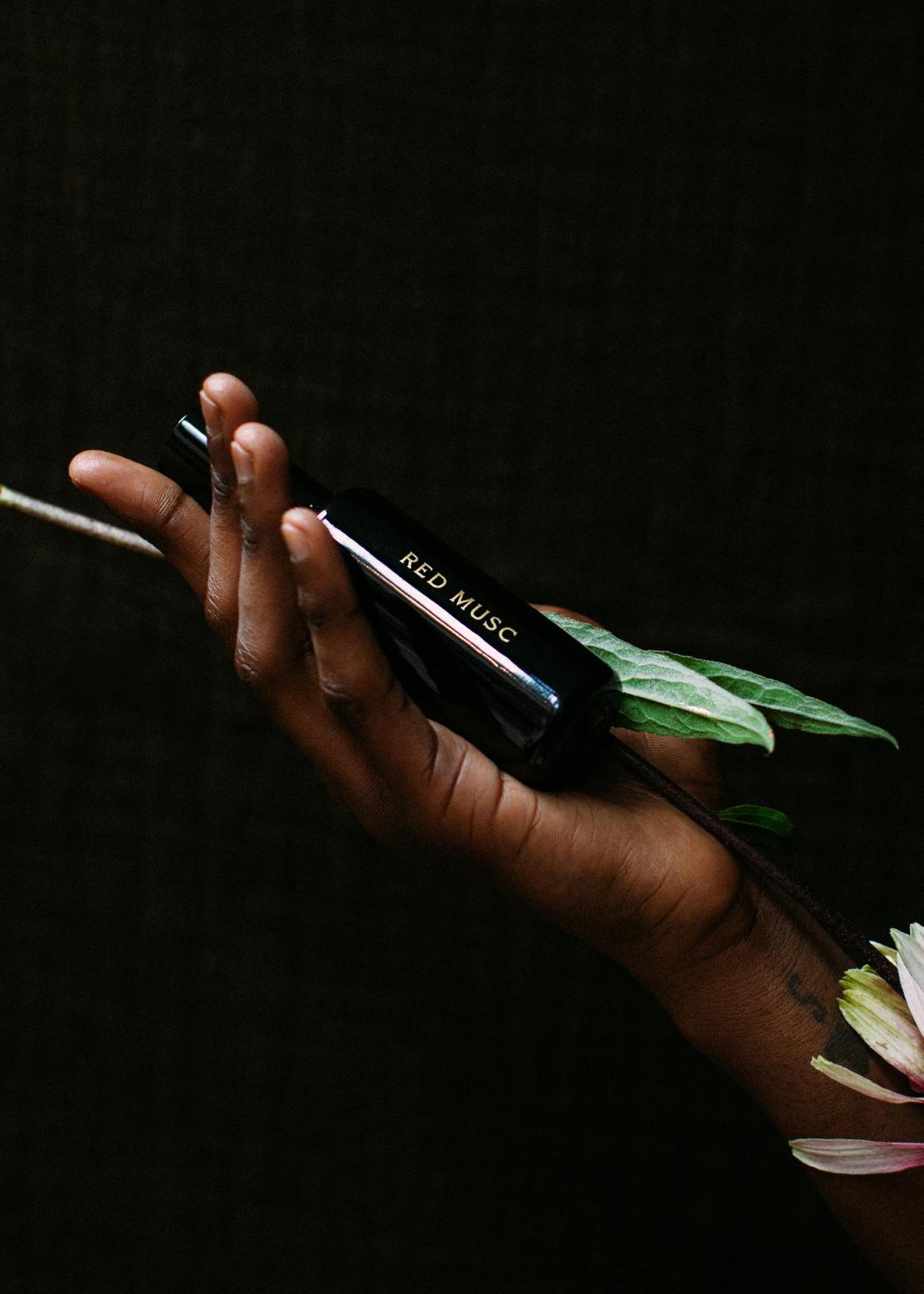
Niche Musk Perfume: A Guide to Musks in Perfumery | MAD and LEN
Musk in niche perfumery goes far beyond generic synthetic musk. Natural macrocycles (muscone), plant musks (ambrette, cistus-labdanum), and natural animalic notes (civet, castoreum) form a complex palette that artisanal perfumery exploits where mass-market perfumery stops.
Musk is probably the most ambiguous word in perfumery. It refers simultaneously to an animal secretion, several chemical syntheses, an olfactory profile (warm, sweet, slightly animalic), and a family of base notes. In niche perfumery, this complexity becomes a working material.
THE HISTORY OF MUSK IN PERFUMERY
Original musk comes from the musk deer (Moschus moschiferus), a small deer from Central Asia. The secretion from its abdominal gland is one of the most complex animal scents ever analyzed—hundreds of molecules contributing to a unique, warm, fecal-sweet signature.
This material has been protected since the 1970s by international conventions on endangered species. Luxury perfumery has since developed two alternative approaches: synthetic macrocyclic musks and plant-based musks.
PLANT-BASED MUSCENS: NATURAL ALTERNATIVES
Ambertette musk (extracted from the seeds of Abelmoschus moschatus) is the plant-based substitute that most closely resembles animal musk in terms of scent. Its signature is soft, slightly vinous, with powdery nuances. It is widely used in natural niche perfumery.
Angelica in the base note can play a musky role. Cistus-labdanum and certain oakmoss varieties have animalic profiles similar to musk. These materials constitute what are known as "amber musks" or "woody musks."
MACROCYCLIC MUSKS IN THE NICHE MARKET
Macrocyclic musks (synthetic muscone, exaltolide, habanolide) are the most widely used synthetic musks in fine and niche perfumery. They differ from nitrated musks (banned in Europe) and polycyclic musks in their molecular structure, which is more reminiscent of natural musk.
These molecules have exceptional staying power on the skin and a delicate sillage. They form the basis of many contemporary niche perfumes that seek a musky, skin-like scent rather than a strong projection.
MUSK PROFILES IN NICHE PERFUMERY: WHAT YOU REALLY FIND
Powdery musk-iris: a soft, almost cosmetic accord. Iris and ambrette musk create a very intimate, skin-like note.
Wooden musk-cedar: grounded, drier. Virginia or Atlas cedar combined with musk creates understated and long-lasting compositions.
Animal musk: Compositions seeking a note close to animal musk use labdanum, civet (in natural perfumery), or macrocycles selected for their fecal-sweet profile.
Aldehydic-floral musk: A tradition of classic haute parfumerie (Chanel N°5) revived in certain contemporary niche fragrances.
FREQUENTLY ASKED QUESTIONS:
WHAT IS PLANT MUSK AND WHERE DOES IT COME FROM?
Ambertette musk, extracted from the seeds of Abelmoschus moschatus, is the most widely used plant musk. Olfactorily similar to animal musk—soft, warm, and slightly alcoholic—it is 100% plant-based.
ARE NICHE MUSCS MORE LONG-LASTING THAN CLASSIC MUSCS?
Macrocyclic musks used in niche fragrances (muscone, exaltolide) have superior longevity compared to nitrated musks found in mass-market products, which are often restricted in Europe. They evaporate more slowly and age better on the skin.
HOW TO DISTINGUISH A QUALITY MUSK PERFUME FROM A GENERIC MUSK PERFUME?
Quality musk evolves on the skin and changes over time. A generic musk is flat and consistent. The presence of macrocyclic or ambrette musk in the ingredient list is a positive sign.